

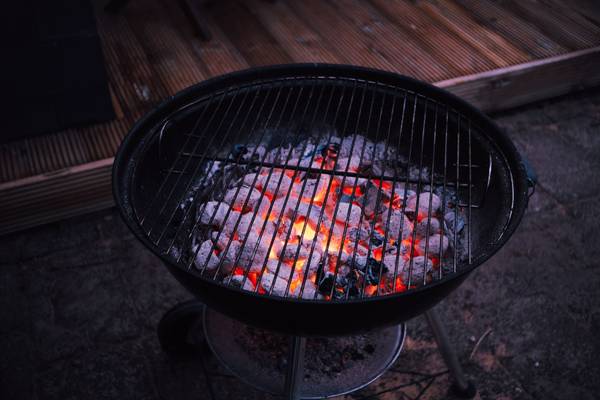
The kettle with a lid is the outdoor oven
The Pit as an Oven
Indirect heat with the lid down and no wood on the fire: the pit doing what an oven does, outdoors, with a little char and a lot of room. Roasting is how you cook a whole chicken, a pan of beans, a skillet of cornbread, or a cobbler on the same fire that just finished the shoulder. It asks for a steady temperature and not much else.
When to use it
Not the move when
The Method
Bank the fire to one side
Light a full chimney and pour it against one wall of the kettle, or split it into two piles left and right with a gap in the middle. The food goes over the gap, never over the coals. On an offset, run a small clean fire and close the firebox damper down until the chamber holds where you want it.
Set a drip pan and the grate
A foil pan under the cool zone catches fat and keeps flare-ups off the coals. Put the grate on, close the lid, and open the vents about halfway. Give it ten minutes to settle before you read it.
Hold the temperature with the vents
Top vent controls how much heat leaves; bottom vent controls how much air feeds the fire. Small moves, then wait five minutes. For 350°F on a kettle, expect the bottom vent about a third open and the top half open, but every pit is its own animal. A probe at grate level tells the truth; the lid gauge does not.
Load and leave it
Put the food over the cool zone, close the lid, and leave it closed. Every peek costs you five minutes of heat. Rotate once, halfway through, if the pit runs hot on one side. Add a few unlit coals to the pile every 45 minutes on a long roast.
Finish by temperature or by look
Birds come off at 165°F in the breast and 175°F in the thigh. Vegetables and breads come off when they look done, and a skewer tells you the middle of a cornbread or cobbler. Rest meat ten minutes; serve sides straight from the iron.
From the pit
Avoid these
Gear for this method
The kettle with a lid is the outdoor oven
A grate-level leave-in probe is the only way to know what the pit is really doing
Keep cooking
No recipes use this method yet — be the first to cook one.
Talk it out
Questions, tweaks, and results from cooks who run this method.
Start the conversation — be the first to talk through this method.

Sign in to join the conversation.
Free to join — and everything stays free to read.